
The Real Amazon Market for Liposomal Vitamin C: Which Delivery Format Actually Wins?
Explore the real market for Amazon Liposome Vitamin C in 2026. We compare liquid, capsule, gummies, powder sachets, and tablets based on market share, monthly sales, real-world market feedback, and production challenges to identify the differences between various delivery formats.
MARKET TRENDS & INGREDIENTS
5/27/20267 min read
For the past few years, “liposomal vitamin C” has been one of the fastest-growing keywords in the supplement industry.
But if you look closely at the market — especially on platforms like Amazon — something interesting appears:
Most brands are not competing on vitamin C anymore.
They are competing on delivery format.
Liquid, capsules, gummies, powder sticks, softgels…
Each format attracts a different customer, requires a different manufacturing system, and creates completely different operational risks.
Market Overview: Dosage Form Distribution (2026 Q1)
Data compiled from Accio Analytics and Amazon Seller Central shows the following market share breakdown:
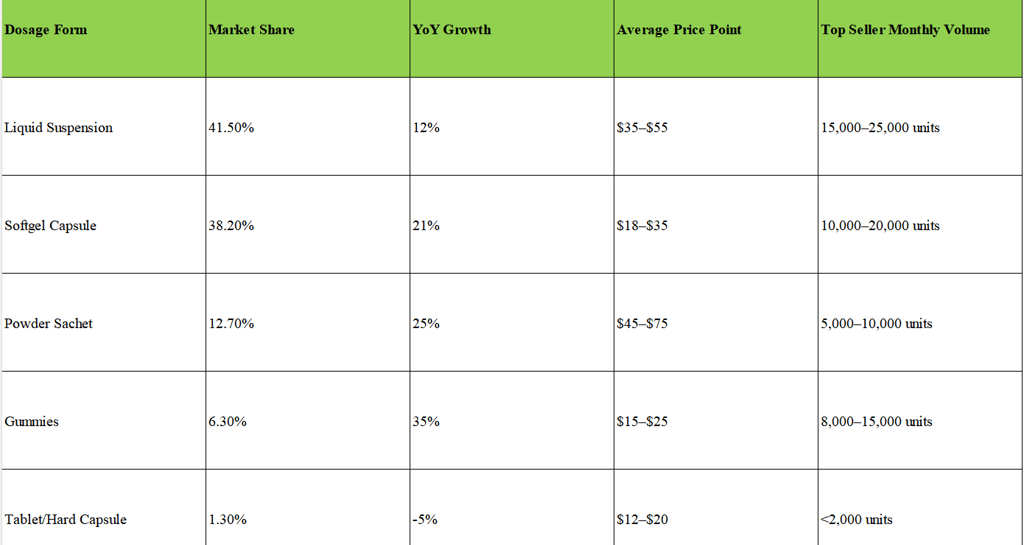
If you analyze top-selling liposomal vitamin C products across Amazon US, several patterns become clear:
Liquid products dominate the traditional “high absorption” positioning
Capsules remain the most operationally stable format
Gummies are growing rapidly because of compliance and repeat purchase behavior
Powder Sachets are increasingly used for portability and cross-border logistics
But sales volume alone doesn’t tell the full story.
Some formats scale easily but have weak retention.
Others have excellent margins but extremely difficult manufacturing requirements.
The real question is:
Which delivery format matches your brand strategy?
Let’s break them down one by one.
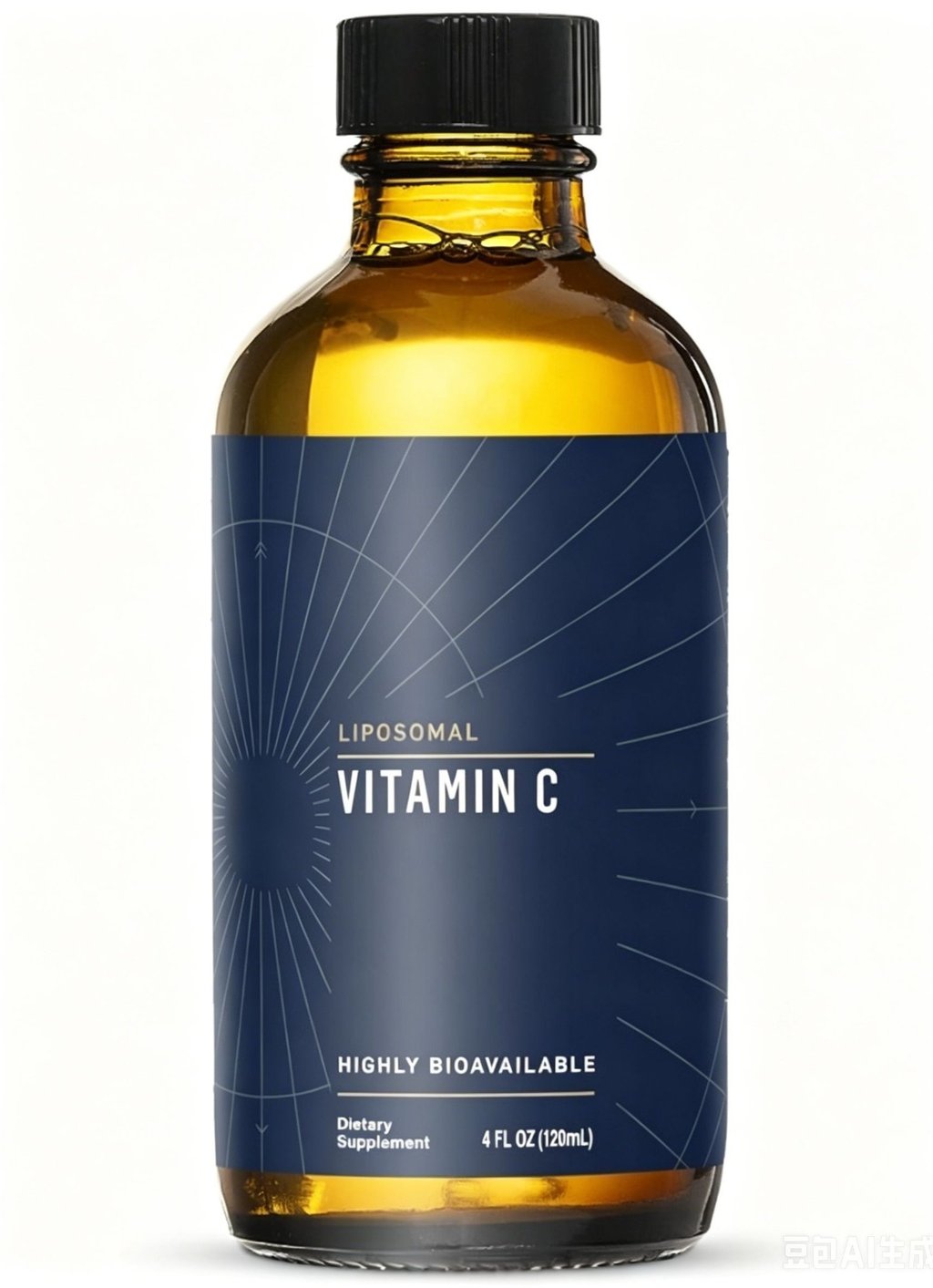
1. Liquid Liposomal Vitamin C
The Original “High Absorption” Format
Liquid is still the most recognizable form of liposomal vitamin C.
Why?
Because liposomes were originally designed as liquid dispersions.
From a technical standpoint, this format most closely resembles the original phospholipid delivery system.
That makes the marketing easier:
High absorption
Fast uptake
Cellular delivery
Medical-grade positioning
Consumers immediately associate liquid liposomal products with advanced technology.
And Amazon sales reflect that.
Many of the long-term top-selling SKUs in this category are still liquid-based.
But here’s the hidden reality:
Liquid is also the most unstable format.
Common problems include:
Oxidation
Layer separation
Flavor degradation
Color change
Shelf-life inconsistency
Especially once products enter:
high-temperature shipping,
long warehouse storage,
or repeated opening by consumers.
This is why many liquid liposomal products perform well initially… but struggle with long-term customer retention.
Best For:
Premium wellness brands
Clinical positioning
High-ticket products
Practitioner channels
Biggest Manufacturing Challenge:
Maintaining liposome stability during filling, storage, and transport.
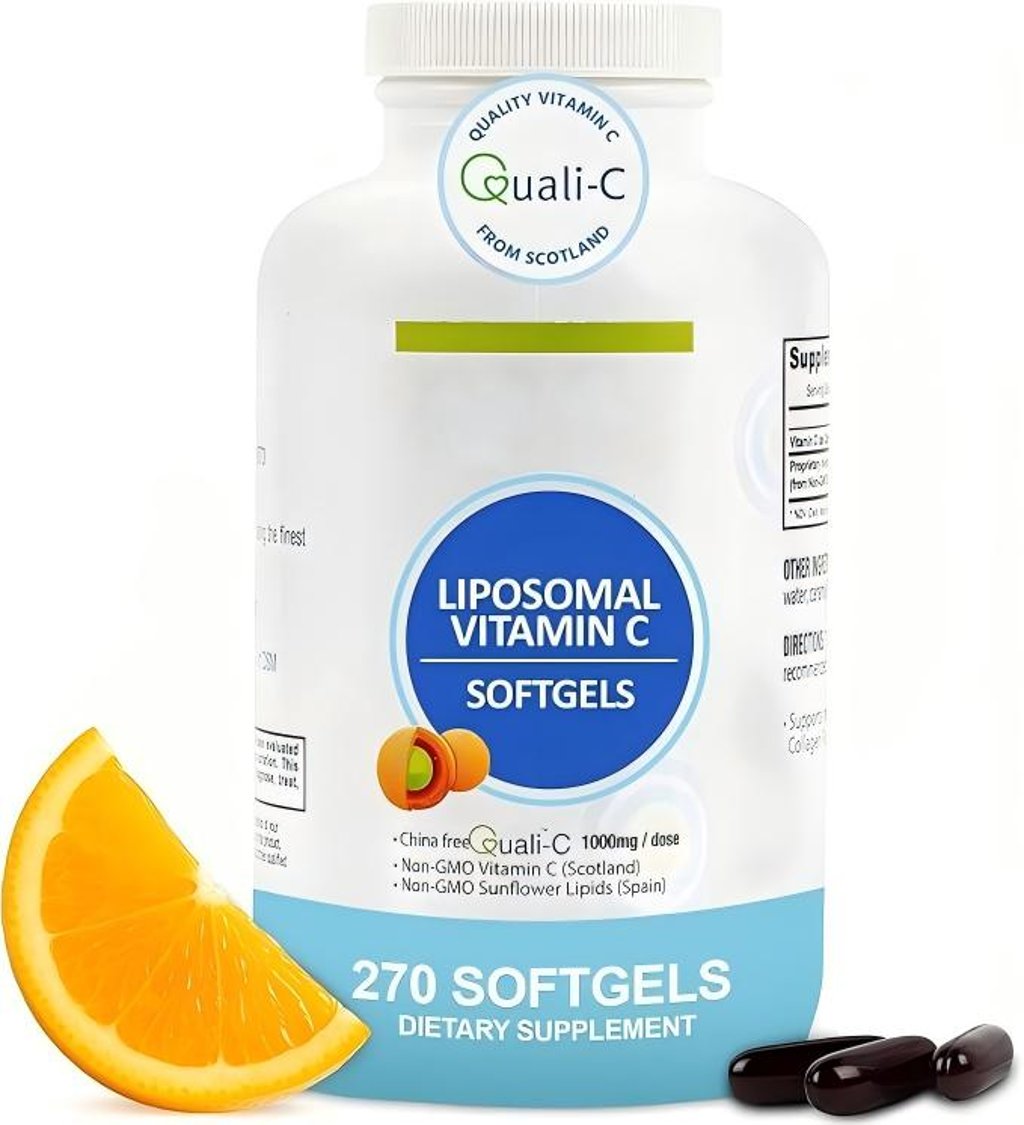
2. Liposomal Vitamin C Capsules
The Most Operationally Stable Format
Capsules rarely become viral products.
But operationally?
They are one of the safest commercial formats.
Compared to liquid products, capsules offer:
better oxygen protection,
easier warehousing,
lower leakage risk, and simpler international shipping.
That matters more than most brands realize.
Especially once you scale beyond small batches.
From Amazon reviews and repeat-purchase behavior, capsule consumers are typically:
older,
more routine-driven,
less trend-sensitive, and more focused on convenience.
The downside?
Capsules have weaker “liposomal perception.”
Consumers don’t visually experience the delivery system the way they do with liquid products.
So brands often struggle to justify premium pricing unless:
branding is strong,
Or clinical positioning is clear.
Best For:
Mature supplement brands
Subscription models
Long-term daily-use positioning
Biggest Manufacturing Challenge:
Preventing phospholipid oxidation during powder processing and encapsulation.
3. Liposomal Vitamin C Powder Sachet
The Logistics-Friendly Growth Category
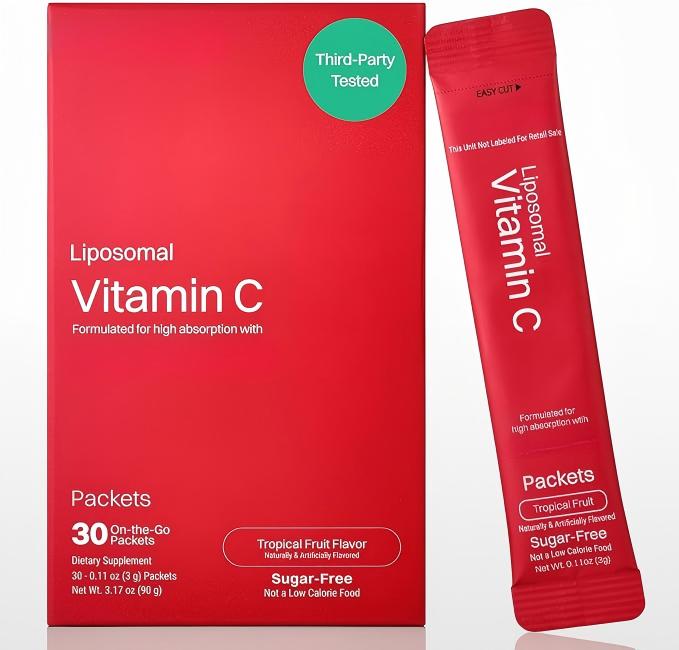
Powder sachets are becoming increasingly important — especially for cross-border brands.
Why?
Because they solve several operational problems at once:
lower shipping cost,
better portability,
improved warehouse stability,
easier international fulfillment.
For many Amazon sellers, this directly improves margins.
But powder systems have their own limitations.
Once liposomal systems are dried:
particle aggregation can occur,
dispersibility decreases,
and rehydration consistency becomes difficult.
This means:
Not every “liposomal powder” behaves like a real liquid liposomal system after reconstitution.
That distinction matters.
Best For:
Global shipping
Travel-focused positioning
Functional beverage concepts
Biggest Manufacturing Challenge:
Maintaining dispersibility and phospholipid stability after drying.
4. Liposomal Vitamin C Gummies
The Fastest-Growing — and Most Difficult — Format
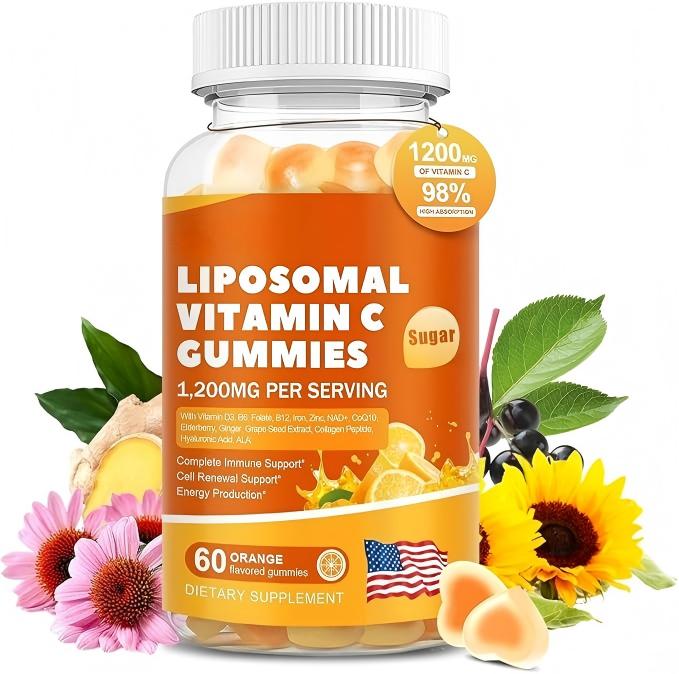
This is where the market is heading.
Not because gummies are technically superior.
But because consumers are changing.
Today’s supplement market increasingly rewards:
convenience, taste, habit formation, and socially friendly products.
And gummies perform extremely well in all four categories.
That’s why gummy-based supplements continue to outperform many traditional formats on:
repeat purchase rate,
consumer compliance,
and younger demographic engagement.
But technically?
Gummies are brutal.
Most liposomal systems were originally designed for liquid suspension — not confectionery processing.
That creates multiple development problems:
Heat Stress
Gummy systems involve thermal processing.
Heat can damage phospholipid structures.
Water Activity
Gummies contain moisture.
That increases:
oxidation risk,
instability,
flavor degradation.
pH Compatibility
Vitamin C itself is acidic.
Balancing:
gel texture,
flavor,
and liposome stability is extremely difficult.
Flavor Masking
Many liposomal raw materials have:
phospholipid odor,
bitterness,
or sulfur-like notes.
Without proper masking systems, the final product tastes unstable or “chemical.”
This is why many “liposomal gummies” on the market are not truly optimized liposomal systems.
Some are simply:
spray-dried powders,
basic emulsions,
or marketing-driven formulations.
Best For:
Modern wellness brands
DTC brands
Social-media-driven products
Younger consumers
Biggest Manufacturing Challenge:
Maintaining liposome integrity during gummy processing and shelf life.
5. Tablet/Hard Capsule Liposomal Vitamin C
Market Position:
Declining segment, dominated by low-quality "pseudo-liposomal" products.
Technical Characteristics:
Typical encapsulation efficiency: <60% (after compression)
The high pressure and shear forces involved in tablet manufacturing completely disrupt the phospholipid bilayer structure, rendering the liposomal delivery system ineffective.
Market Performance:
Declining market share (-5% YoY) as consumer awareness increases
High risk of FTC enforcement actions for false advertising
Recommendation:
Not recommended for any serious product development.
So Which Format Is Best?
There is no universally “best” liposomal vitamin C format.
Only:
the right format for your consumer,
your operational model,
and your brand positioning.
Sometimes the biggest mistake brands make is this:
They choose the format first… and only later think about whether the liposomal system actually fits it.
That usually leads to:
unstable products,
poor repeat purchase,
or manufacturing failure during scale-up.
Real product development works the opposite way.
The correct process is:
Define the consumer use scenario
Choose the delivery format
Engineer the liposomal system around that format
Validate stability before scaling production
That is how commercially successful products are actually built.
Liposomal Vitamin C Is Not Just an Ingredient
Many factories can supply a liposomal vitamin C raw material.
Far fewer can help brands build:
a stable delivery system,
a scalable manufacturing process,
and a commercially viable product format.
At Vantage BioGenesis, our focus is not simply on supplying ingredients.
We work on:
Formulation compatibility,
Processing stability,
Label consistency
Because in the real market, the success of liposomal vitamin C is rarely decided by the ingredient alone.
➡️ Check The Feasibility of My Ideas
Learn more about Liposomal Vitamin C:
➡️ Liposomal Vitamin C vs Regular Vitamin C: Does It Really Have Higher Bioavailability? Analysis based on clinical evidence (2026)
➡️ Global Market Entry: Regulatory & Labeling Guide for Liposomal Vitamin C (USA, EU, & China)
➡️ How to Source Real Liposomal Vitamin C?
Core Consumer Issues (B2C)
Q1: What is the best form of liposomal vitamin C to take in 2026?
There is no universal best option—choose based on your lifestyle:
Liquid: Maximum absorption, ideal for clinical use (requires refrigeration after opening)
Capsules: Most convenient, longest shelf life (18-24 months unopened)
Gummies: Best for people who struggle to swallow pills, highest daily compliance
Powder sachets: Perfect for travel and mixing into smoothies or beverages
❌ Avoid tablets entirely: Manufacturing pressure completely destroys the phospholipid bilayer structure, rendering the liposomal delivery system ineffective.
Q2: Are liposomal vitamin C gummies actually effective?
Only when formulated correctly. Most mass-market "liposomal gummies" are just regular spray-dried vitamin C powder mixed into candy bases. True liposomal gummies use specialized heat-stable phospholipid technology that preserves bilayer integrity during thermal processing, delivering absorption comparable to liquid formats. Always request third-party COA verification to confirm liposome integrity.
Q3: Which is better: liquid or capsule liposomal vitamin C?
Liquid liposomal vitamin C offers slightly higher absorption as it stays closest to the original phospholipid delivery system, but it only lasts 30 days after opening and requires refrigeration. Capsules deliver 90-95% of the absorption of liquid, have an 18-24 month shelf life even after opening, and are ready to take with no preparation. Capsules also have far better stability during shipping and storage, with no risk of oxidation or separation, and are generally more affordable.
Q4: Why does my liquid liposomal vitamin C separate?
Layer separation is the most common issue with liquid products. It happens when phospholipid vesicles break down and aggregate over time, especially when exposed to high temperatures during shipping, repeated oxygen exposure from opening, or UV light. Mild separation can be temporarily fixed by shaking, but severe clumping means the liposomal structure is permanently compromised and absorption will be significantly reduced.
Q5: How long does liposomal vitamin C last after opening?
Liquid: 30 days when refrigerated
Capsules: Remain effective until the printed expiration date if stored in a cool, dry place
Gummies: 6 months when kept tightly sealed
Powder sachets: Individually sealed sachets retain full potency until their expiration date
Core Brand/Seller Issues (B2B)
Q6: Which liposomal vitamin C format performs best on Amazon FBA?
Capsules are the gold standard for Amazon FBA: they have zero leakage risk, excellent long-term warehouse stability, the lowest customer return rates, and simplest international shipping. Gummies are a strong second if you use temperature-controlled logistics during peak summer months. Liquids carry the highest operational risk due to frequent separation issues and customer complaints about product degradation.
Q7: What is the most profitable liposomal vitamin C format?
Gummies have the highest gross margins (65-75%) but also the highest manufacturing complexity and technical barriers. Powder sachets offer the best cross-border margins due to their low shipping weight and volume. Capsules provide the most predictable profits with the lowest operational risk, making them ideal for new brands. Liquids have good premium margins but high logistics costs and product waste rates.