
Liposomal Vitamin C vs Regular Vitamin C: Does It Really Have Higher Bioavailability? Analysis based on clinical evidence (2026)
We reviewed 10 PubMed clinical studies (2016-2024) to reveal why 9/10 trials confirm its 1.2–5.4x superior absorption. Essential data for supplement brands to cut through the marketing hype.
MARKET TRENDS & INGREDIENTS
4/22/20267 min read
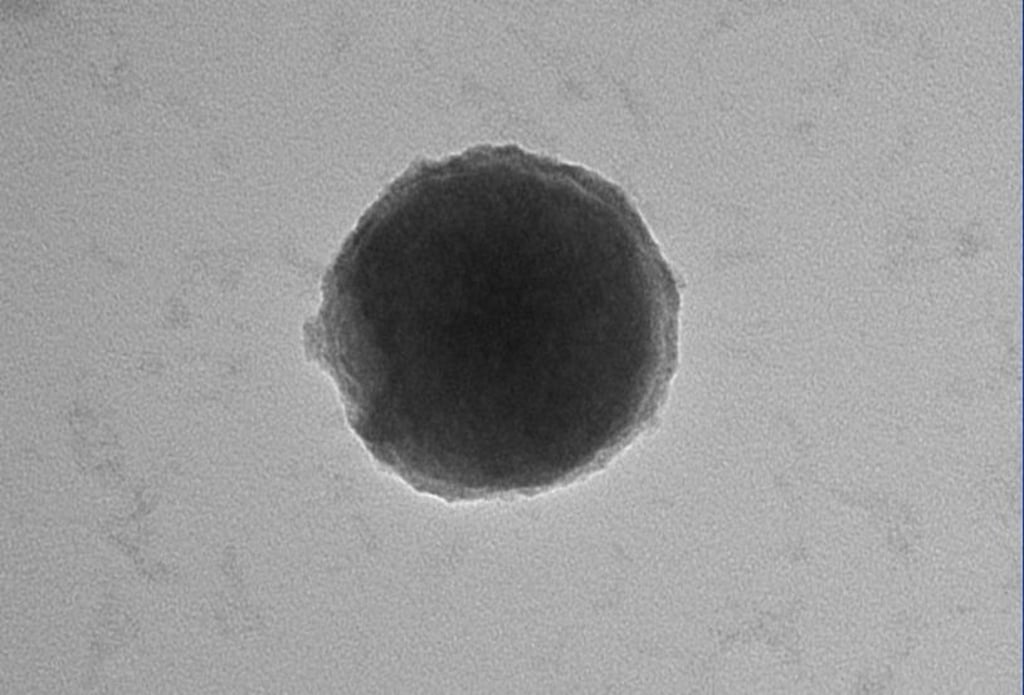
Liposomal vitamin C has taken the supplement industry by storm, with brands across the globe marketing it as a "game-changing" upgrade to standard vitamin C. But as demand surges, so does the skepticism: is "higher absorption" just a clever marketing gimmick, or is there solid scientific evidence to back up these claims?
For supplement brands, this is not just an academic question. Billions of dollars are being spent on liposomal vitamin C products every year, yet most people—including many product developers—do not fully understand how it works or how it differs from regular ascorbic acid.
This article cuts through the hype. We conducted a systematic review of all peer-reviewed human studies on liposomal vitamin C published in PubMed between 2016 and 2024 to provide an objective, evidence-based answer to the most important question: Does liposomal vitamin C really deliver higher bioavailability?
1. Why Vitamin C Supplementation Is Non-Negotiable for Humans
Before we compare different forms of vitamin C, let’s establish the unshakable biological foundation: humans are among the very few mammals that cannot synthesize vitamin C endogenously.
Approximately 60 million years ago, an irreversible mutation occurred in the GULO (L-gulonolactone oxidase) gene of our primate ancestors. This mutation completely eliminated our ability to convert glucose into vitamin C—a capability that nearly all other mammals retain.
The difference is staggering: a 1,000-pound cow synthesizes 10–15 grams of vitamin C every single day, automatically increasing production during periods of stress, illness, or injury. Humans have no such backup system. We rely 100% on dietary sources or supplements to meet our vitamin C needs, and even a mild deficiency is extremely common.
The Prevalence and Symptoms of Vitamin C Deficiency
While severe vitamin C deficiency (scurvy) is rare in modern society, mild deficiency is shockingly widespread. According to the Centers for Disease Control and Prevention (CDC), more than 80% of U.S. adults fail to meet the recommended daily allowance (RDA) for vitamin C.
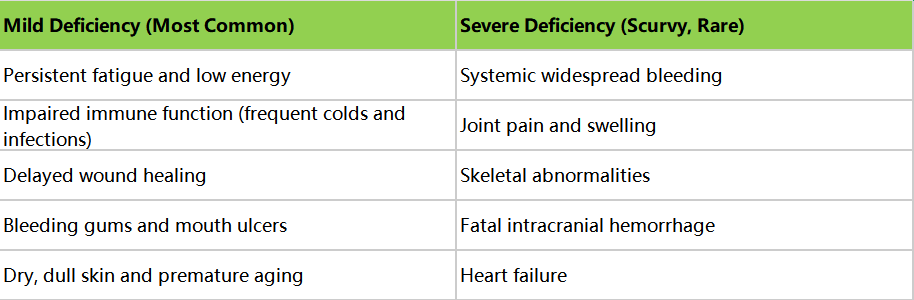
2. So what is the actual difference between liposomal and standard vitamin C?
Both regular vitamin C (ascorbic acid) and liposomal vitamin C ultimately deliver the same active molecule to your bloodstream.
The only difference—and the entire basis of liposomal vitamin C’s value proposition—is how they cross the intestinal epithelial barrier to enter your circulation.
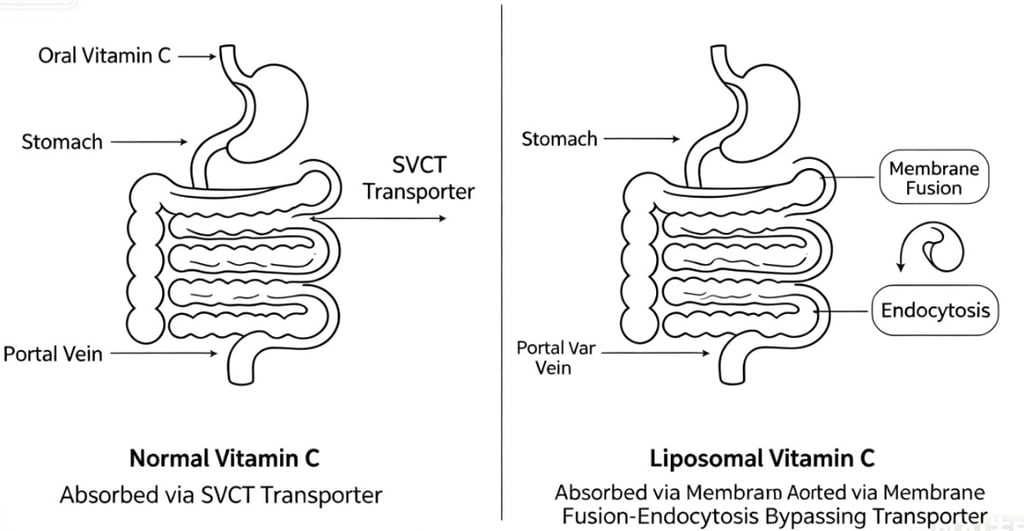
1) Regular Vitamin C: The Transporter Saturation Problem
Regular vitamin C is a water-soluble, highly polar molecule that follows a well-documented absorption pathway:
Gastric phase: No absorption occurs in the stomach. Free ascorbic acid passes intact into the small intestine with gastric emptying.
Intestinal phase (core limitation): 100% dependent on the SVCT1 and SVCT2 transporter proteins located on the apical membrane of intestinal epithelial cells.
Bloodstream entry: Vitamin C is transported into the cell, then crosses the basolateral membrane into portal venous blood and eventually the systemic circulation.
The critical limitation of this pathway is transporter saturation. At oral doses of approximately 200mg, the SVCT transporters become fully occupied.
Any additional vitamin C cannot be absorbed and is excreted in the feces.
This is why doubling the dose of regular vitamin C does not double the absorption—it just doubles the waste.
At doses above 1 gram, absorption efficiency drops to less than 50%, and the unabsorbed vitamin C creates a hypertonic environment in the intestines, causing bloating, diarrhea, and stomach upset.
2) Liposomal Vitamin C: The Transporter-Independent Advantage
Liposomal vitamin C solves this fundamental problem by encapsulating ascorbic acid inside a phospholipid bilayer nanovesicle—essentially a tiny "artificial cell membrane" that mimics the structure of human cells.
This unique structure allows liposomal vitamin C to be absorbed via completely different pathways that do not rely on SVCT transporters:
Gastric phase: The phospholipid shell protects the internal vitamin C from degradation by stomach acid and oxidation. It also eliminates the acidic irritation associated with high doses of regular vitamin C.
Intestinal phase (game-changer): Absorption occurs via three lipid-based mechanisms:
Direct membrane fusion: The liposome fuses with the intestinal epithelial cell membrane, releasing vitamin C directly into the cytoplasm.
Endocytosis: The entire liposomal vesicle is engulfed by the intestinal cell, then ruptures to release vitamin C intracellularly.
Slow, controlled release: A small portion of liposomes disintegrate in the intestinal lumen, releasing vitamin C for passive diffusion.
Bloodstream entry: Liposomal vitamin C achieves higher and faster plasma peak concentrations with no transporter saturation limit. High doses are well-tolerated with minimal gastrointestinal side effects.
3. Clinical Evidence: 9/10 Studies Confirm Higher Bioavailability
To evaluate the true bioavailability of liposomal vitamin C, we reviewed all relevant human studies published in PubMed between 2016 and 2024. Our search identified 10 eligible studies:
7 randomized crossover trials (the gold standard for bioavailability research)
1 parallel-group trial
2 non-randomized observational studies
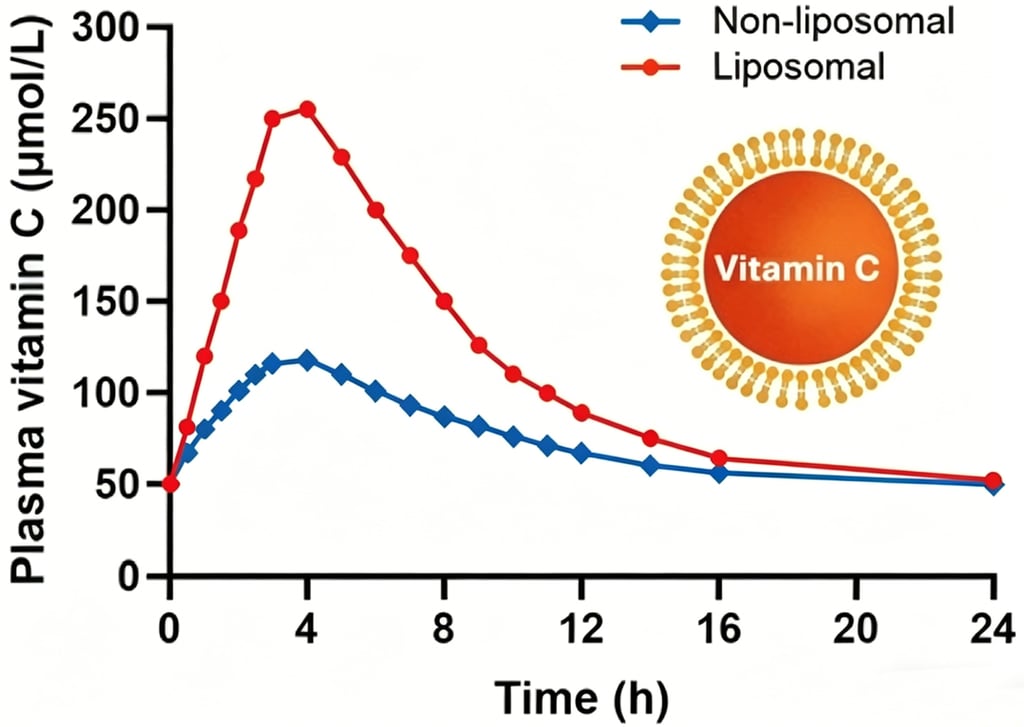
Consistent finding across 9 out of 10 studies: Liposomal vitamin C achieves significantly higher plasma concentrations than equivalent doses of non-liposomal vitamin C.
Specifically, the studies reported:
Peak plasma concentration (Cmax): 1.2–5.4 times higher than regular vitamin C
Total systemic exposure (AUC): 1.3–7.2 times higher than regular vitamin C
Most importantly, liposomal vitamin C was shown to bypass the oral absorption ceiling that limits regular vitamin C.
4. Why Study Results Vary
The reported differences in bioavailability are not due to flaws in the studies themselves, but rather a combination of factors, including differences in the quality of the liposomal vitamin C formulations used and in the subjects' baseline vitamin C concentrations.
The scientific evidence is clear: high-quality liposomal vitamin C does deliver significantly higher bioavailability than regular vitamin C.
But for dietary supplement brands hoping to develop successful products, having genuinely reliable efficacy is only half the battle.
5. Ready to Move Forward?
Option 1: Build Your Product Today
If you are ready to capitalize on the rapidly growing liposomal market (12.3% CAGR), Vantage BioGenesis delivers premium brand ingredients and OEM supplements with professional research support.
➡️Start a Feasibility Analysis
Option 2: Deep Dive into Compliance
Unsure if your market allows liposomal vitamin C, and how to claim "higher bioavailability" on the label? Before launching your product, be sure to understand the regulatory requirements of major global markets (China, the U.S, and Europe).
➡️ Read Our More Articles about Market Trends & Ingredients
FAQ (Science & Clinical)
Q: Is liposomal vitamin C a scam?
A: No. 9 out of 10 peer-reviewed studies (2016–2024) suggest high-quality liposomal vitamin C may offer better bioavailability than regular vitamin C. Confusion often comes from low-quality products that lack functional liposomes.
Q: Is IV vitamin C better than liposomal vitamin C?
A: Not necessarily for daily use. IV vitamin C may deliver higher short-term peaks, but liposomal vitamin C may be more convenient, affordable, and provide longer-lasting blood levels, with no need for medical supervision.
Q: Are all liposomal vitamin C products the same?
A: No. Quality can vary significantly. Cheap versions may have low encapsulation rates, high PDI, and poor stability. Premium products typically have 80–90% encapsulation, PDI <0.25, and stable particle size, which support better absorption.
Q: Is liposomal vitamin C more bioavailable than regular vitamin C?
A: High-quality liposomal vitamin C may bypass the SVCT transporter limit that can cap regular vitamin C absorption, which may result in higher plasma levels for some users.
Q: How much more absorbable is liposomal vitamin C?
A: Studies suggest it delivers 1.2–5.4x higher Cmax and 1.3–7.2x higher AUC compared to regular vitamin C, though results can vary based on formulation and liposomal vitamin C quality.
Q: Does liposomal vitamin C cause less stomach upset?
A: Liposomal vitamin C may avoid the hypertonic effect that can cause bloating and diarrhea with high-dose regular vitamin C for some users.
Q: Can I take liposomal vitamin C in high doses?
A: Many users find it well-tolerated even at gram-level doses, and it may remain relatively well-absorbed compared to regular vitamin C at high doses.
Reference:
Nishikimi M, Yagi K. Molecular basis for the deficiency in humans of gulonolactone oxidase, a key enzyme for ascorbic acid biosynthesis. Am J Clin Nutr. 1991 Dec;54(6 Suppl):1203S-1208S. doi: 10.1093/ajcn/54.6.1203s. PMID: 1962571.
Purpura M, Jäger R, Godavarthi A, Bhaskarachar D, Tinsley GM. Liposomal delivery enhances absorption of vitamin C into plasma and leukocytes: a double-blind, placebo-controlled, randomized trial. Eur J Nutr. 2024 Dec;63(8):3037-3046. doi: 10.1007/s00394-024-03487-8. Epub 2024 Sep 6. PMID: 39237620; PMCID: PMC11519160.
Joseph A, Kumar D, Balakrishnan A, Shanmughan P, Maliakel B, Im K. Surface-engineered liposomal particles of calcium ascorbate with fenugreek galactomannan enhanced the oral bioavailability of ascorbic acid: a randomized, double-blinded, 3-sequence, crossover study. RSC Adv. 2021 Nov 26;11(60):38161-38171. doi: 10.1039/d1ra06483e. PMID: 35498071; PMCID: PMC9044018.
Jacob J, Sukumaran NP, Jude S. Fiber-Reinforced-Phospholipid Vehicle-Based Delivery of l-Ascorbic Acid: Development, Characterization, ADMET Profiling, and Efficacy by a Randomized, Single-Dose, Crossover Oral Bioavailability Study. ACS Omega. 2021 Feb 17;6(8):5560-5568. doi: 10.1021/acsomega.0c05963. PMID: 33681596; PMCID: PMC7931380.
Gopi S, Balakrishnan P. Evaluation and clinical comparison studies on liposomal and non-liposomal ascorbic acid (vitamin C) and their enhanced bioavailability. J Liposome Res. 2021 Dec;31(4):356-364. doi: 10.1080/08982104.2020.1820521. Epub 2020 Oct 6. PMID: 32901526.
Davis JL, Paris HL, Beals JW, Binns SE, Giordano GR, Scalzo RL, Schweder MM, Blair E, Bell C. Liposomal-encapsulated Ascorbic Acid: Influence on Vitamin C Bioavailability and Capacity to Protect Against Ischemia-Reperfusion Injury. Nutr Metab Insights. 2016 Jun 20;9:25-30. doi: 10.4137/NMI.S39764. PMID: 27375360; PMCID: PMC4915787.
Łukawski M, Dałek P, Borowik T, Foryś A, Langner M, Witkiewicz W, Przybyło M. New oral liposomal vitamin C formulation: properties and bioavailability. J Liposome Res. 2020 Sep;30(3):227-234. doi: 10.1080/08982104.2019.1630642. Epub 2019 Jul 2. PMID: 31264495.
Wen CJ, Chiang CF, Lee CS, Lin YH, Tsai JS. Double Nutri (Liposomal Encapsulation) Enhances Bioavailability of Vitamin C and Extends Its Half-Life in Plasma. J Biomed Nanotechnol. 2022 Mar 1;18(3):922-927. doi: 10.1166/jbn.2022.3274. PMID: 35715901.
McGarry, S.V.; Cruickshank, D.; Iloba, I.; Jensen, G.S. Enhanced Bioavailability and Immune Benefits of Liposome-Encapsulated Vitamin C: A Combination of the Effects of Ascorbic Acid and Phospholipid Membranes. Nutraceuticals 2024, 4, 626-642. https://doi.org/10.3390/nutraceuticals4040034
Żmuda, P.; Khaidakov, B.; Krasowska, M.; Czapska, K.; Dobkowski, M.; Guzowski, J.; Kowalczyk, P.; Lemke, K.; Folwarski, M.; Foryś, A.; et al. Bioavailability of Liposomal Vitamin C in Powder Form: A Randomized, Double-Blind, Cross-Over Trial. Appl. Sci. 2024, 14, 7718. https://doi.org/10.3390/app14177718
Mikirova N, Levy T, Hunninghake R. The Levels of Ascorbic Acid in Blood and Mononuclear Blood Cells After Oral Liposome‐Encapsulated and Oral Non‐Encapsulated Vitamin C Supplementation, Taken Without and With IV Hydrocortisone[J]. Journal of Orthomolecular Medicine, 2019, 34(1).
Certain groups are at significantly higher risk of deficiency:
Smokers: Require 30% more vitamin C daily due to increased oxidative stress
The elderly: Have reduced intestinal absorption efficiency
Pregnant and breastfeeding women: Have increased physiological demands
Individuals with chronic stress or illness: Have accelerated vitamin C utilization